
Leadership Lessons from Crisis Situations: Universal Principles for Every Organization
The recent operational crisis affecting India’s largest carrier sent shockwaves through the aviation industry and everyday life. Thousands of passengers were disrupted, regulators stepped in, and the company’s reputation and finances were tested. While the headlines focused on cancelled flights and regulatory responses, the situation also offers a concentrated case study in leadership — decisions, trade-offs, preparation, and communication. This article draws practical leadership lessons from the crisis while staying neutral and respectful toward all parties involved. Wherever I reference factual events, I’ve cited reputable reporting so you can read deeper. https://www.reuters.com/world/india/india-orders-crisis-hit-indigo-cut-flights-by-5-2025-12-09/

Image Source: Unsplash
Crises do not belong to one industry. They do not discriminate between aviation, manufacturing, IT services, healthcare, startups, or large enterprises. A crisis is simply a moment when reality collides with preparation. Some organizations emerge stronger. Others struggle long after the event ends.
Recent large-scale operational disruptions across industries remind leaders of an uncomfortable truth: most crises are not caused by a single mistake. They are the result of systems, culture, decisions, and leadership behaviors interacting under pressure.
This article avoids naming individuals or organizations. Instead, it extracts universal leadership lessons that apply to any organization facing uncertainty, external pressure, or rapid change.
1. Leaders Do Not Control External Forces — They Prepare for Them

Image Source: Unsplash
Every organization operates within forces it cannot control. These include regulatory bodies, economic cycles, market volatility, seasonal demand, environmental conditions, and sudden shifts in customer behavior.
Strong leaders do not fight these forces. They acknowledge them early and design systems that can absorb their impact. Leadership maturity begins with accepting that control is limited, but preparation is not.
Effective leaders consistently ask:
- What external risks could realistically affect us?
- How quickly could they materialize?
- What decisions would we regret not preparing for?
Preparation does not eliminate disruption, but it reduces confusion, panic, and damage.
Key leadership mindset: Control what you can. Prepare for what you cannot.
Harvard Business Review – Leadership in Uncertainty
2. Balanced Lean Approach: Efficiency Without Fragility
Lean thinking has helped organizations improve efficiency, reduce waste, and increase accountability. However, extreme optimization often removes resilience.
When systems operate at near-maximum capacity:
- People have no recovery margin
- Processes lack buffers
- Small disruptions escalate quickly
A balanced lean approach recognizes that some slack is not waste. It is insurance.
Balanced leaders:
- Maintain buffers in critical roles
- Allow time for people to recover
- Design flexibility into decision-making
Organizations that survive crises well are rarely the most aggressive optimizers. They are the most thoughtful balancers.
Lean Enterprise Institute – Lean and Resilience
3. Focus on People, Not Just Assets

Image Source: Unsplash
Assets can be repaired or replaced. People cannot.
During crises, leadership attention often shifts to infrastructure, capacity, and numbers. But crises are lived by people — employees under stress, customers facing disruption, and leaders making difficult decisions.
People-first leadership means:
- Protecting physical and mental well-being
- Preventing burnout during peak pressure
- Empowering frontline teams to make decisions
When people feel trusted and supported, they solve problems faster than systems alone ever can.
McKinsey – What Employees Need from Leaders in a Crisis
4. Contingency Planning Is a Leadership Habit

Image Source: Unsplash
Most organizations have contingency plans. Very few have contingency capability.
True readiness is not about documents stored on shared drives. It is about leaders and teams who have practiced decision-making under uncertainty.
Strong contingency leadership includes:
- Clear authority during disruption
- Predefined decision thresholds
- Regular simulations and drills
- Comfort with incomplete information
Organizations that respond calmly in crises do so because leaders trained for complexity long before it arrived.
Project Management Institute – Crisis Leadership
5. Managing Seasonal and Cyclical Demand Responsibly

Image Source: Unsplash
Many businesses experience predictable cycles — festivals, financial year-ends, project launches, or tourist seasons.
Leadership failure occurs when predictability is treated like surprise.
Responsible leaders plan seasonal capacity by:
- Using flexible workforce models
- Cross-training employees for multiple roles
- Building temporary partnerships
- Protecting core teams from exhaustion
The question is not whether demand will spike. The question is how responsibly leaders prepare for it.
6. Speed of Response Protects Reputation

Image Source: Unsplash
In a crisis, the first few days matter most.
Slow, defensive, or unclear responses damage trust faster than the original problem. Clear, empathetic, and decisive responses stabilize confidence.
Effective leaders:
- Acknowledge reality early
- Communicate what is known and unknown
- Act decisively with available data
- Update stakeholders frequently
Leaders do not need perfect answers immediately. They need visible ownership.
Forbes – Crisis Leadership Communication
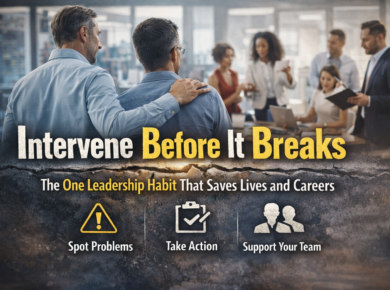
7. Build a Culture That Surfaces Problems Early

Image Source: Unsplash
Most crises send warnings long before impact. These appear as near misses, small delays, informal complaints, or unusual data trends.
The difference between resilient and fragile organizations is culture.
Psychologically safe cultures:
- Encourage people to speak up
- Reward issue identification
- Train managers to respond calmly to bad news
Problems hidden grow stronger. Problems exposed grow weaker.
Google re:Work – Psychological Safety
8. Increase Cross-Functional Capability

Image Source: Unsplash
Siloed excellence fails during crises. Integrated capability succeeds.
Cross-functional leadership enables faster decisions, fewer handoffs, and shared accountability.
Leaders build this capability through:
- Cross-functional role rotations
- Joint problem-solving workshops
- Shared performance metrics
- Crisis simulations involving multiple teams
When people understand the system beyond their function, they make better decisions under pressure.
9. Crisis as a Catalyst for Stronger Leadership
Crises expose leadership truth. They reveal decision quality, cultural strength, and organizational maturity.
Strong leaders treat crises as learning accelerators. After stability returns, they ask:
- What assumptions failed?
- What behaviors helped recovery?
- What must change permanently?
Organizations that institutionalize learning emerge stronger, calmer, and more trusted.
Final Thought: Leadership Is Revealed Under Pressure
Anyone can lead when systems work. True leadership appears when systems strain.
Balanced efficiency, people-first thinking, early problem surfacing, and decisive response are not crisis tools. They are leadership fundamentals.
Crises do not define organizations. Leadership does.
Crises do not define organizations. Leadership does.


 Ankit Joshi